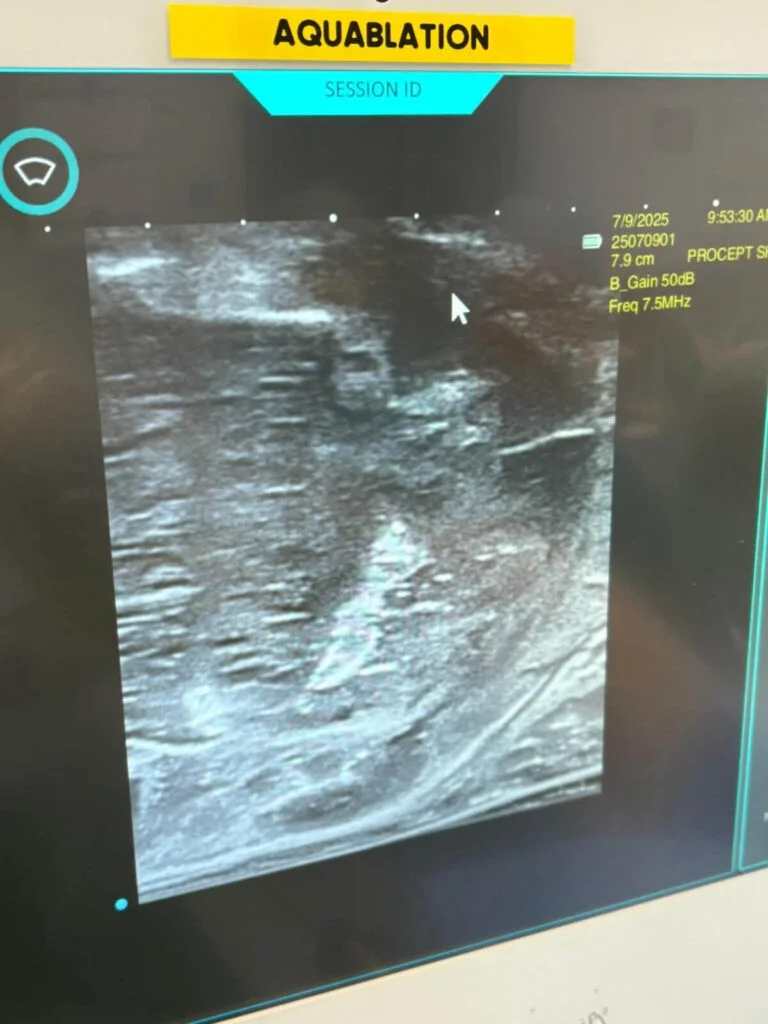

United Kingdom — A growing body of clinical experience is highlighting Aquablation therapy as a transformative treatment option for men suffering from the symptoms of benign prostatic hyperplasia (BPH) — a common condition caused by prostate enlargement that can significantly impact quality of life.
Aquablation therapy is an advanced surgical procedure that combines robotics, real-time imaging, and a heat-free waterjet to remove obstructive prostate tissue with high precision. Unlike traditional surgical approaches, the procedure does not use heat to ablate tissue, which can help preserve surrounding anatomy important for urinary and sexual function while delivering long-lasting symptom relief.
The treatment is performed under anaesthesia using an image-guided robotic system that maps the prostate and directs a high-velocity waterjet to resect only the excess tissue responsible for lower urinary tract symptoms (LUTS). Because Aquablation is delivered through the urethra, no external incisions are required, helping reduce recovery time and surgical trauma.
Clinical evidence and patient outcomes continue to support Aquablation’s effectiveness across a wide range of prostate sizes and shapes — an advantage over some traditional therapies that may be limited by gland size. Additionally, studies demonstrate low rates of irreversible complications, such as incontinence or erectile dysfunction, while preserving ejaculatory function in the majority of cases.
For many patients, Aquablation therapy offers the potential to significantly improve urinary flow, reduce symptoms such as urgency and frequency, and restore quality of life without the prolonged recovery or higher side-effect profile sometimes seen with other surgical techniques.
As urology centres expand their service offerings, Aquablation is emerging not only as a clinically effective option but also as a procedure that aligns with patient priorities for minimally invasive solutions and durable outcomes.